
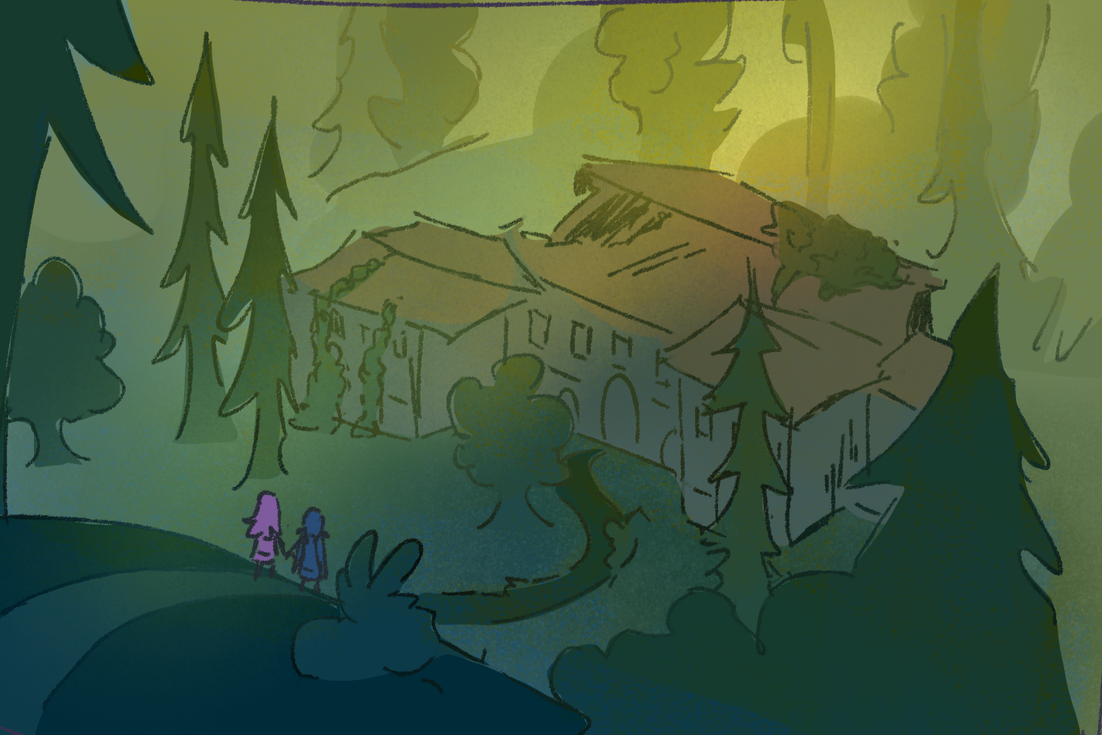
Project Heart
Trapped in a dreamland shaped by their own conflict, two schoolgirls must confront the moment that tore them apart.
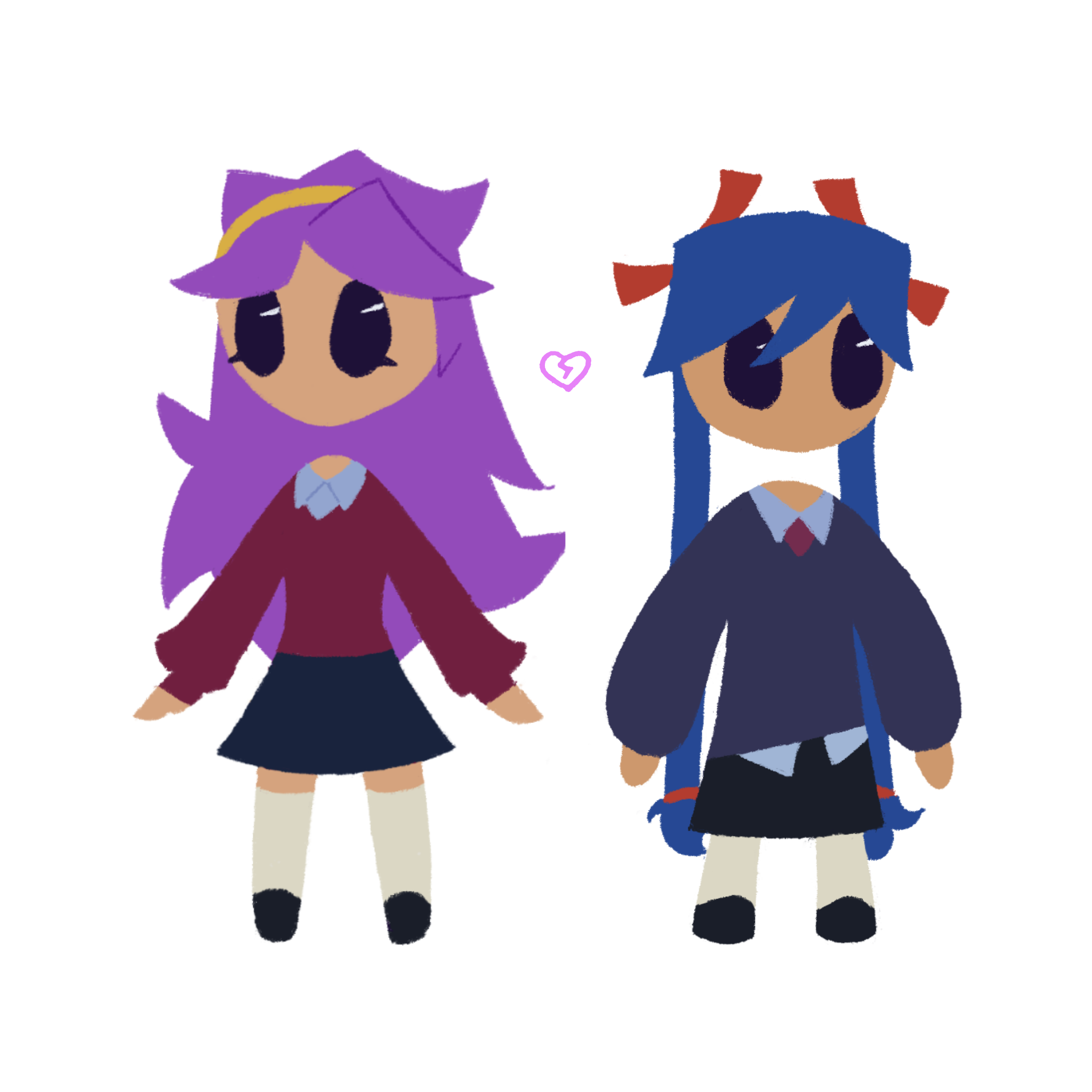
Help Violet and Blue escape Hereafter in a genre-bending cooperative adventure by exploring a dreamlike world shaped by their past.
With every discovery, the realm shifts around them, revealing surreal environments, evolving puzzles, and strange abilities tied to their individual memories. The deeper you go, the more the mystery grows: why are they trapped here, and which of them remembers the truth?
Work with a friend to guide Violet and Blue through strange, interconnected worlds where every puzzle, creature, and memory reflects the fracture between them.
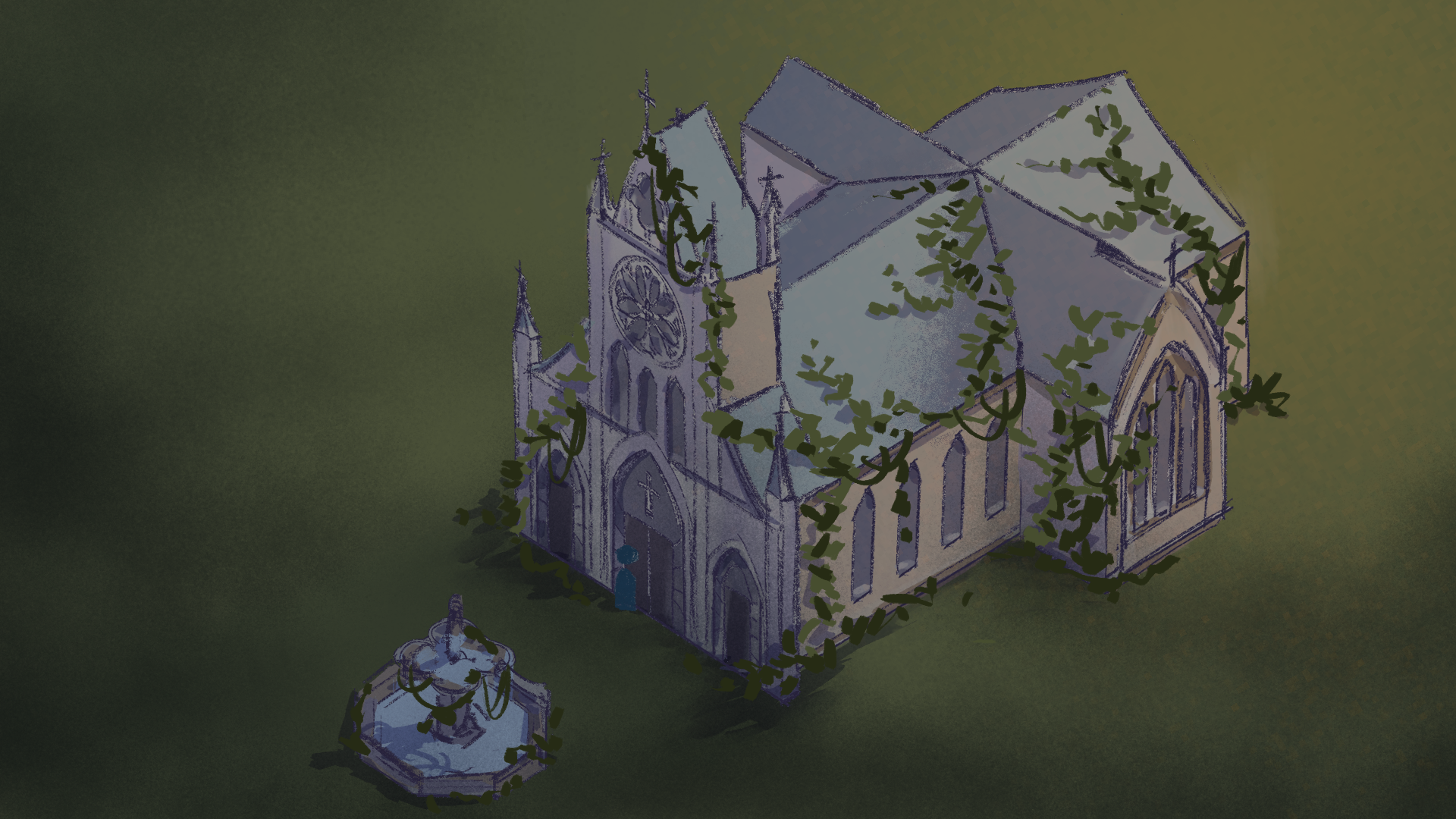
The Resonant Cathedral
-
Violet and Blue arrive in a quiet village where strange statues of humans in unnatural yet impassioned poses. With some experimenting, they soon realize the figures are not statues at all. These statues are the townspeople, petrified in states of overwhelming emotion.
As the pair slowly learn to understand the strange magic saturating the town, whispers from the cathedral draw them toward the priest who first wielded it. What they uncover is not a villain, but the consequences of trying to carry everyone’s pain alone.
To restore the town, Violet and Blue realize that healing begins with listening, not with trying to change what someone feels.
-
The core loop revolves around perceiving, embodying, and aligning with emotion rather than altering it.
Players can Listen to the emotional state of nearby beings, reading their hearts through visual cues like color, shape, and rhythm.
Players may then Empathize, temporarily embodying that emotion themselves, but holding an emotion too long risks destabilization and their own petrification.
To free the villagers trapped as Villager Echoes, players must Harmonize by matching the exact emotion they observe, restoring the person and stabilizing the surrounding space.
Throughout the level, players must periodically Stabilize themselves to return to emotional neutrality.
Progress emerges through careful observation, emotional restraint, and cooperation, reinforcing that healing comes from understanding and alignment rather than force.
Whispering Pines Academy
-
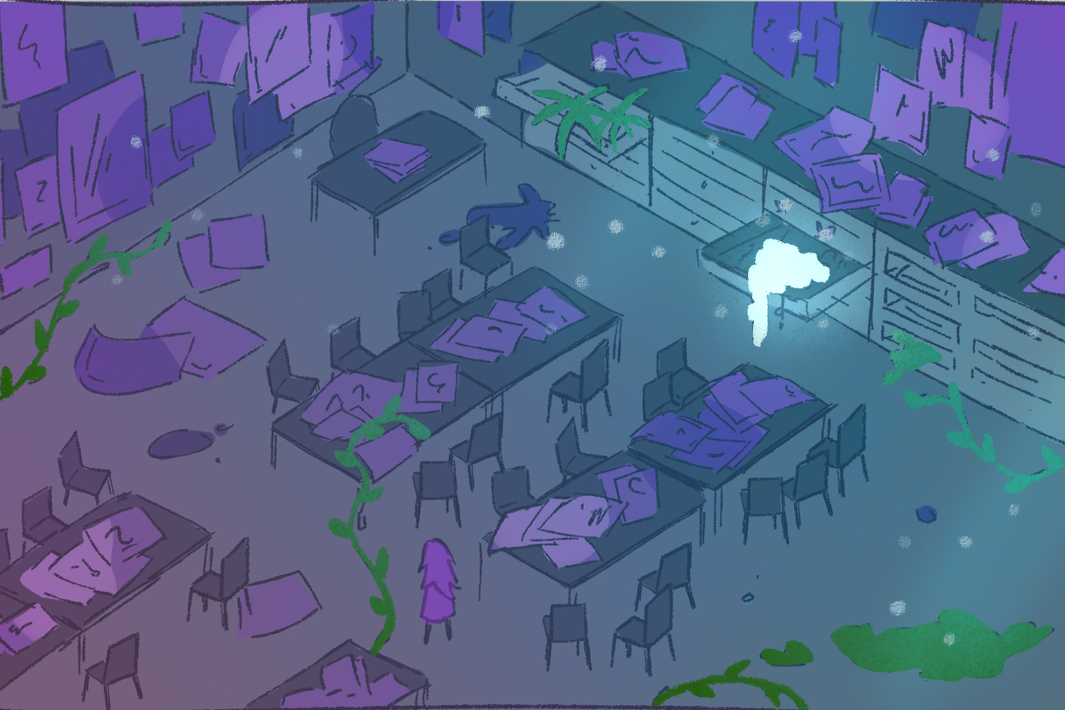
Whispering Pines Academy returns as a suspended reflection of itself, its halls and classrooms frozen at the moment Violet and Blue first fell into Hereafter.
As they wander through the quiet corridors, memories surface from the spaces they once shared, revealing moments of friendship, tension, and misunderstanding. Each memory reflects a different perspective, slowly uncovering how the same events shaped them in different ways.
By exploring the school and engaging with these fragments of the past, Violet and Blue begin to discover more about who they were to each other and how two people can carry entirely different truths from the same history.
-
Gameplay in Whispering Pines Academy centers on cooperative exploration shaped by contrasting perspectives. Violet and Blue move through the same spaces, but they do not experience them in the same way.
Players interact with memory-marked objects throughout the environment to trigger flashbacks that reveal fragments of the past. These memories are experienced from the perspective of the character who engages with them, and because they are shaped by emotion rather than objective truth, the same event can appear differently depending on who remembers it.
As players uncover these memories, new dialogue options become available, allowing Violet and Blue to discuss what they saw and how they interpreted it. Conversations are player-driven and contextual, encouraging communication between players while acknowledging that their interpretations may not align. Progress emerges through comparing perspectives and reflecting on what each character believes to be true.
Puzzle rooms interrupt exploration with moments of controlled pressure. When players enter a classroom puzzle, the door locks behind them, isolating the space until the problem is solved. These contained challenges echo the academic environment of the school, transforming familiar subjects and evaluations into gameplay obstacles that reinforce the both character’s experience of expectation and performance.
Inspirations
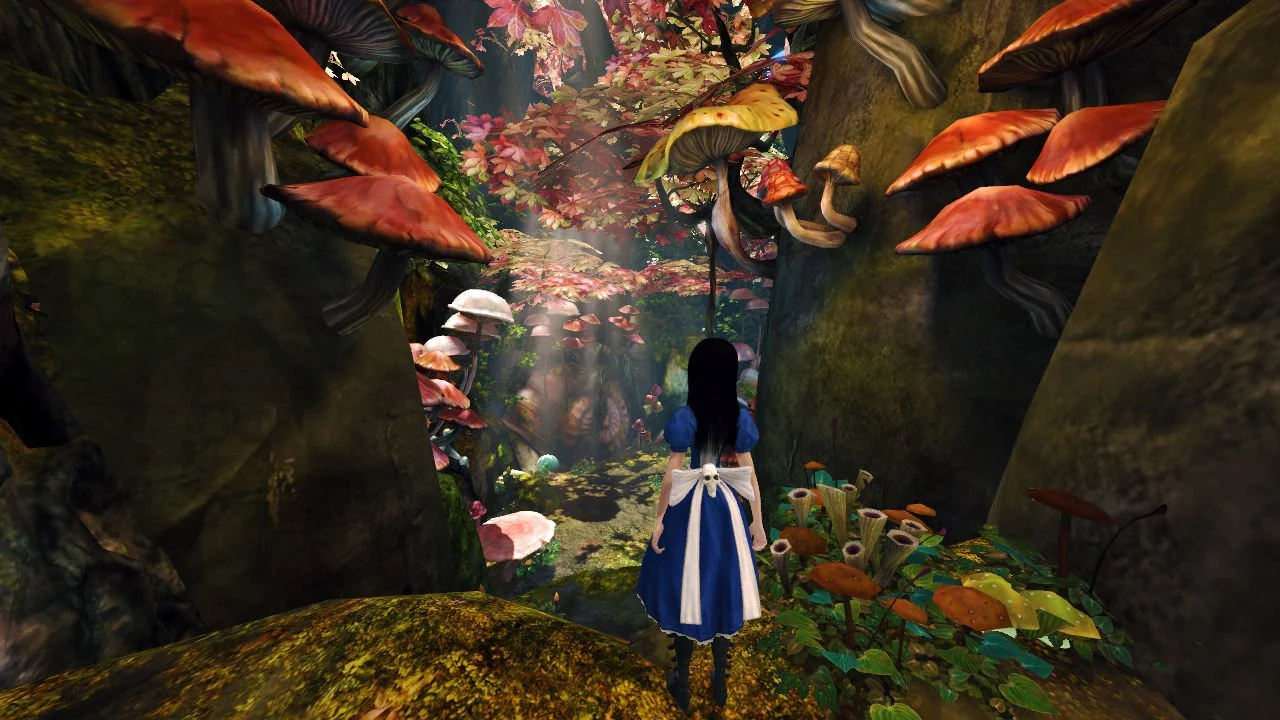
Alice: Madness Returns turns Wonderland into a psychological dreamscape where environments and creatures reflect the inner conflict its main character.
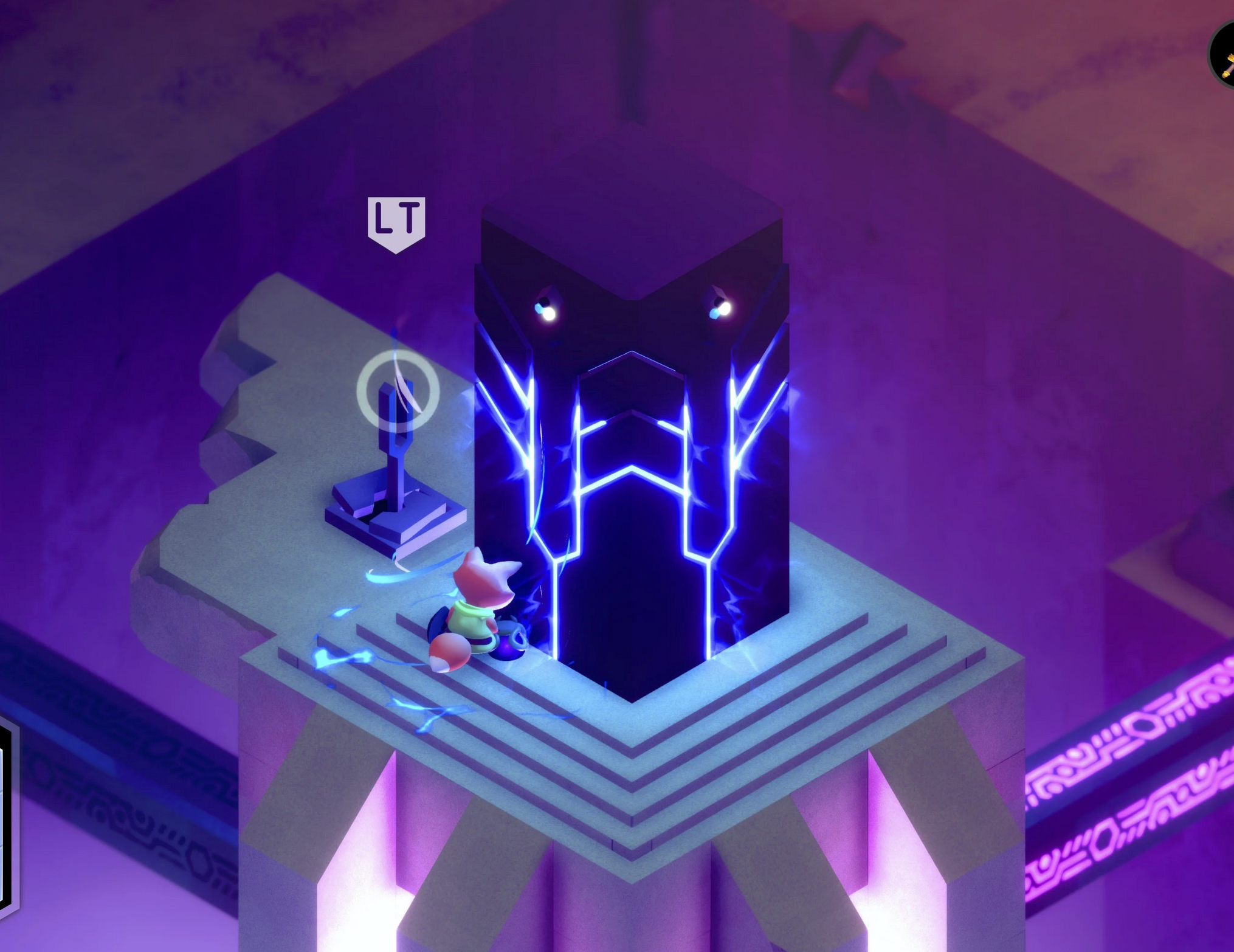
Tunic encourages players to explore carefully, uncover hidden systems, and piece together meaning through observation rather than explicit instruction.
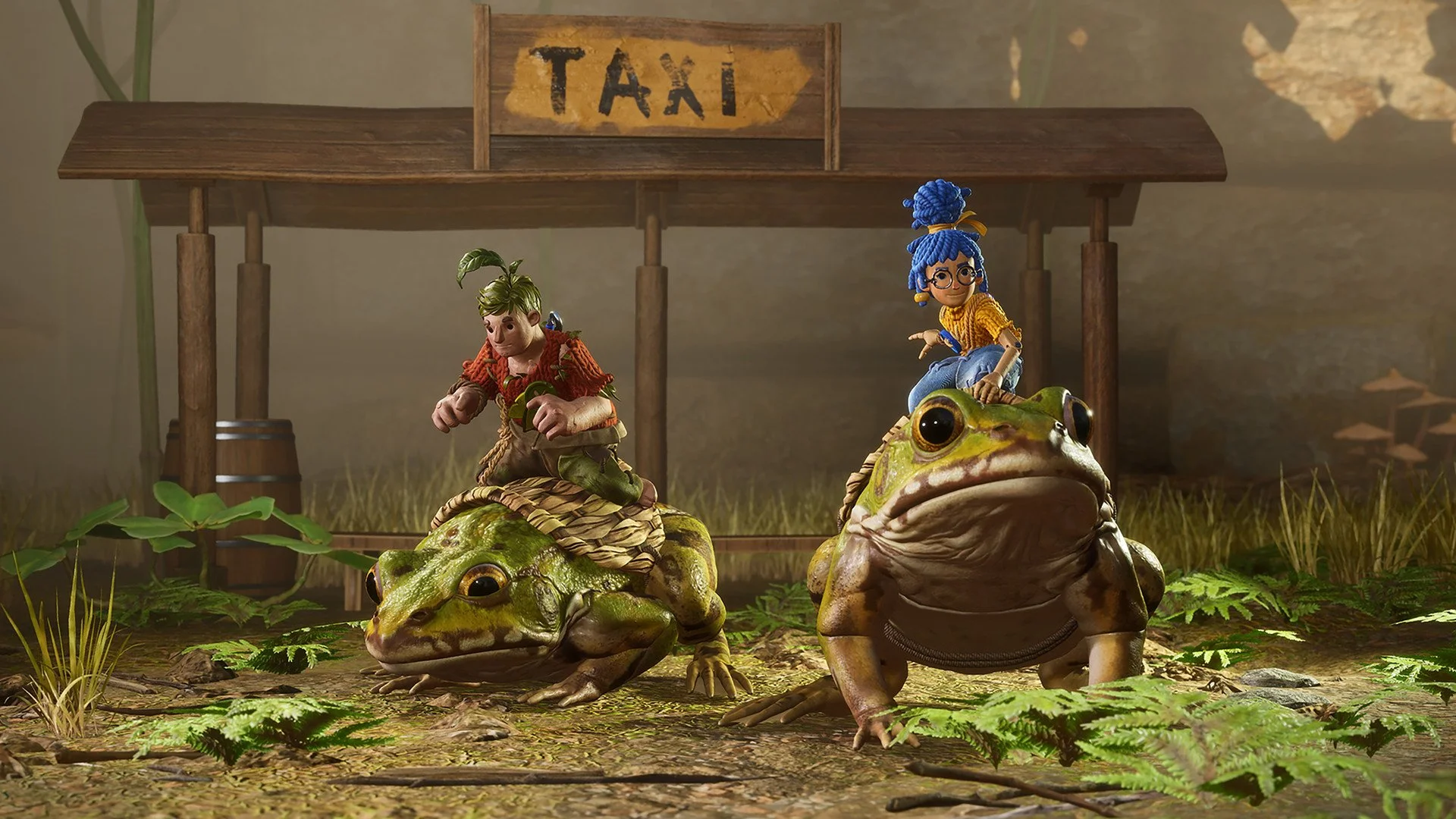
It Takes Two requires two players to use different abilities and perspectives to navigate both gameplay challenges and a fractured relationship.